Trauma & PTSD Therapy

Healing the Nervous System So You Can Reclaim Your Present.
Trauma has a way of hijacking your present. Even when you are logically safe, your body and mind may still feel like they are fighting for survival.
Perhaps you are constantly on edge, waiting for the other shoe to drop. You might find yourself having disproportionate reactions to small stressors, or conversely, feeling completely numb and disconnected from the people you love. You may struggle with nightmares, intrusive memories, or a relentless inner critic that tells you whatever happened was your fault.
For a long time, society defined trauma very narrowly—reserving the term only for combat veterans or survivors of catastrophic accidents. At Dandelion Wellness Counseling, we know that trauma is far more complex. Trauma is not defined by the event itself, but by how your nervous system processed (or failed to process) that event.
You are not broken, and you are not "crazy" for reacting the way you do. Your mind and body are simply having a normal reaction to an abnormal experience. We are here to provide the trauma-informed care and emotional support you need to finally process the past, calm your nervous system, and step back into your life.
What is Trauma? ("Big T" vs. "Little t")
Many trauma survivors delay getting help because they tell themselves, "It wasn't that bad," or "Other people have it worse." But trauma is subjective. It is any experience that deeply overwhelms your ability to cope, leaving you feeling helpless or out of control.
Therapists generally categorize trauma into two types to help validate your experience:
- "Big T" Trauma: These are single, highly distressing, and often life-threatening events. Examples include a severe car accident, a natural disaster, a physical or sexual assault, or the sudden death of a loved one.
- "Little t" Trauma: These are highly distressing events that may not be physically life-threatening but cause significant emotional disruption, especially when they are repeated over time. Examples include childhood emotional neglect, bullying, high-conflict divorce, financial ruin, or emotional abuse in a toxic relationship.
If an experience has changed the way you view yourself, the world, or the safety of others, it is trauma. Both types are incredibly valid and deeply impact your mental health.

The Science of Trauma
To heal from Post-Traumatic Stress Disorder (PTSD) or trauma, it is essential to understand that trauma is not just "in your head"—it lives in your body.
When you experience a traumatic event, your brain’s alarm system (the Amygdala) takes over, triggering a survival response: Fight, Flight, Freeze, or Fawn. Under normal circumstances, once the danger passes, your brain realizes you are safe and stores the memory in the past (via the Hippocampus).
However, during a traumatic event, the system can get short-circuited. The memory doesn't get filed away as a past event. Instead, it gets trapped in the nervous system as a current threat.
When triggered by a sound, a smell, or a stressful situation, your body reacts as if the trauma is happening all over again. This is why you cannot "just get over it" using logic. Your body is caught outside of its "Window of Tolerance" (your optimal zone of arousal). Therapy helps widen that window so you can stay grounded and present.
Identifying the Symptoms of PTSD and Trauma
Some people become highly explosive and anxious, while others withdraw and shut down. The symptoms typically fall into four main categories:
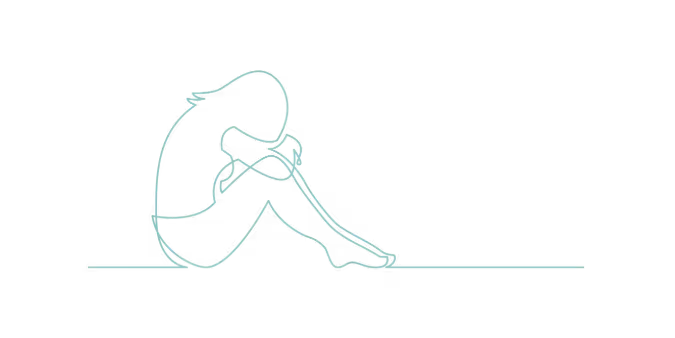
Intrusive Memories (Reliving the Trauma)
- Flashbacks where you feel or act as if the traumatic event is happening right now.
- Recurrent, distressing nightmares.
- Severe emotional distress or physical reactions (racing heart, sweating) to things that remind you of the event.
Avoidance Behaviors
- Going out of your way to avoid places, people, or activities that trigger memories of the trauma.
- Avoiding thinking or talking about the event (numbing your emotions with alcohol, drugs, or excessive work).

Hyperarousal (Living on High Alert)
- Being easily startled or frightened (an exaggerated startle response).
- Always being on guard for danger (hypervigilance).
- Irritability, angry outbursts, or aggressive behavior.
- Difficulty sleeping and concentrating.

Negative Changes in Mood and Thinking
- Pervasive feelings of guilt, shame, or self-blame.- Feeling detached or alienated from family and friends.
- A distorted, negative view of yourself or the world (e.g., "I am bad," or "No one can be trusted").
PTSD vs. Complex PTSD (C-PTSD)
While classic PTSD often stems from a single traumatic event, Complex Trauma (C-PTSD) results from prolonged, repeated trauma where escape was impossible.
This is most commonly seen in adults who grew up in abusive or neglectful households, or survivors of domestic violence and long-term toxic relationships.
Alongside standard PTSD symptoms, C-PTSD deeply affects your self-concept. It often involves chronic feelings of worthlessness, severe difficulty regulating emotions, and profound struggles in forming healthy relationships. At Dandelion Wellness, our therapists are specifically trained to untangle the deep roots of complex childhood trauma.
Dandelion's approach to trauma therapy
Trauma therapy must be handled with extreme care. Moving too fast can be re-traumatizing. Our trauma-informed care model in West Islip ensures that safety and stabilization always come first.

Establishing Safety & Coping Strategies
Before we ever process the past, we ensure you are safe in the present. We teach you concrete coping strategies—grounding techniques, breathwork, and mindfulness—to manage anxiety and flashbacks. You must have the brakes installed before we can drive the car.
.avif)
Trauma-Focused Cognitive Behavioral Therapy (TF-CBT)
CBT is a highly effective tool for trauma. We help you identify and gently challenge the "cognitive distortions" left behind by the trauma. For example, shifting the core belief from "It was my fault because I should have known better" to "I survived a terrible situation using the tools I had at the time."

Integration and Post-Traumatic Growth
Healing is not just about the absence of pain; it is about the return of joy. As your symptoms decrease, we work on rebuilding your self-esteem, establishing healthy boundaries, and helping you build a future that is not dictated by your past.

Somatic & Nervous System Regulation
Because trauma lives in the body, talk therapy alone is sometimes not enough. We incorporate body-based (somatic) approaches to help release stored trauma. This involves learning how to track physical sensations, regulate your breathing, and discharge the "fight or flight" energy that has been trapped in your nervous system for years.
Frequently Asked Questions
No. This is a common fear, but you never have to share the graphic details of your trauma if you don't want to. Healing can occur by focusing on how the trauma is currently impacting your nervous system and your life today. You are always in control of the pace of our sessions.
Trauma is not a competition. If an experience from your past is causing you distress, changing how you view yourself, or interfering with your relationships or quality of life, it is "bad enough." Your pain deserves to be witnessed and healed, regardless of what caused it.
The timeline for trauma recovery is unique to every individual. Healing from a single "Big T" event may take a few months, whereas untangling decades of complex childhood trauma may be a longer journey. Our goal is to provide immediate relief through coping skills early on, while doing the deep work at a pace that feels safe for you.
Still have questions?
Finding the right therapist is a deeply personal choice. Let’s connect for a brief, zero-pressure chat to see if we are the right fit for your needs.